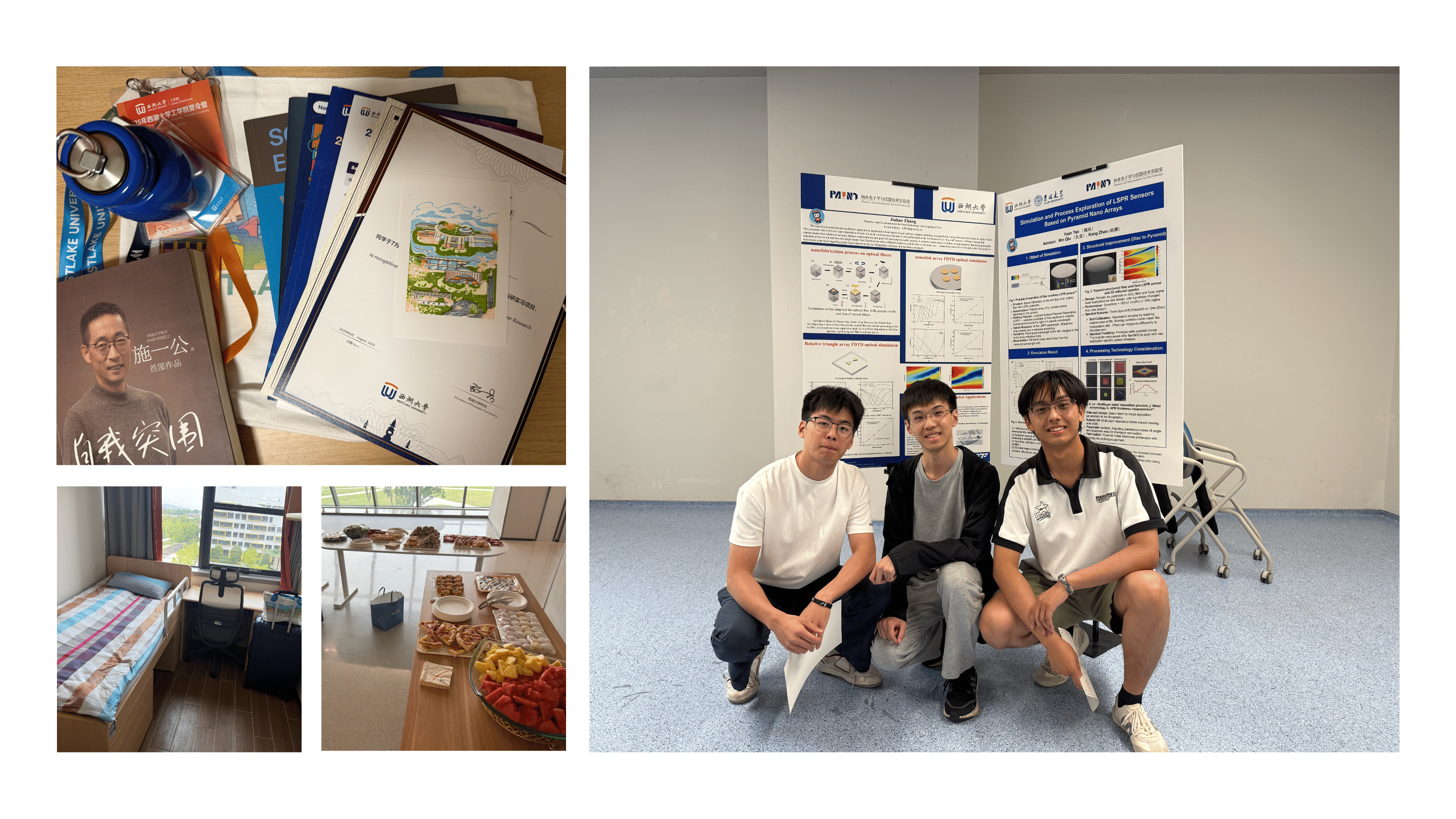
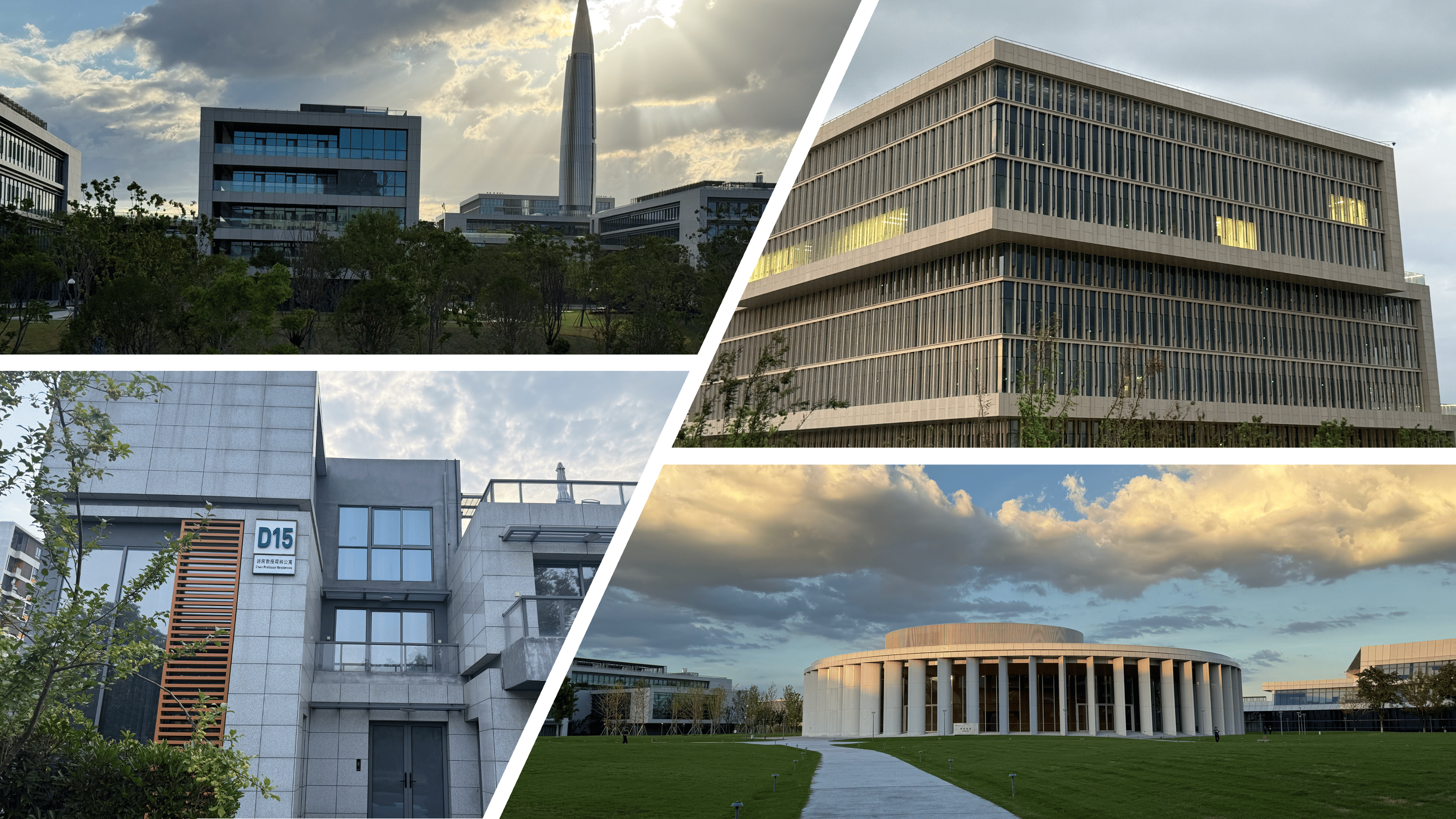
This summer, I was very fortunate to have the opportunity to conduct a six-week summer research program at Westlake University, joining Professor Min Qiu’s research group. Although six weeks is a short time, the insights and inspiration I gained were long-lasting and profound, leaving me with deep reflections to this day.
Prologue: Standing on the Eve of the Smart Glasses Boom
Why does my summer research reflection start with smart glasses? Because this is one of the cutting-edge frontiers of Professor Qiu’s group, and also a rapidly developing technological field.
Today, the industry widely believes that smart glasses are on the verge of an explosive breakthrough and may even replace smartphones in daily life. The product category is currently divided into three main types: cinematic glasses, first-person view recording glasses, and the highly anticipated AI glasses.
From a technological standpoint, AR (Augmented Reality), MR (Mixed Reality), and VR (Virtual Reality) form a continuum that progresses from the real world to the virtual. So why, after the cooling of the “metaverse” hype, are smart glasses once again regarded as the next-generation platform capable of replacing smartphones? I believe the key lies in the rapid advancement of AI technologies.
The form factor of glasses is inherently ideal for AI interaction. Microphones enable real-time conversation with AI, and “display-equipped” AI glasses allow us to receive information more efficiently through vision as well as hearing—for example, real-time translation during conversations or live navigation overlays.
Clearly, display-enabled glasses require strong technological capabilities. The most promising display technology today is waveguide optics . The manufacturing processes (such as nano-imprinting and photolithography etching) and materials of waveguide lenses have become the focal point of competition among major companies.
Recently, Meta adopted silicon carbide (SiC) lenses in its new Orion glasses, thanks to SiC’s high refractive index and excellent thermal conductivity. These properties may simultaneously solve the issues of small field of view and heat accumulation in traditional glass-based lenses.
Coincidentally, this is precisely the field that Professor Qiu’s team has been deeply investing in.
The Path of Research, Industry, and Application
When I applied for the summer research program, I learned that Professor Qiu’s company, Westlake Instruments , had already achieved mass production of laser lift-off equipment for SiC wafers—something conceptually related to the laser stealth dicing techniques I had encountered before. This gave me an immediate sense of familiarity.
Professor Qiu’s long-term strategic layout in SiC materials demonstrates his visionary thinking:
- Westlake Instruments – Focusing on laser lift-off of large-size silicon carbide, diamond, and other third-generation semiconductor wafers. This is based on the team’s early work in SiC wafer separation.Compared to this industrialized laser lift-off, my previous work on laser lift-off of silicon materials was more like a toy.
- Moldnano – specializes in precision SiC processing, particularly in fabricating gratings and waveguide structures for the booming AR glasses market. Through collaboration with TianKe HeDa, they have also preemptively addressed raw material cost challenges.
In the lab, I saw firsthand a single-layer full-color SiC waveguide lens with no rainbow effect and a wide field of view. I believe that, with global industrial efforts and the rapid decline in SiC wafer prices, this technology will soon reach households worldwide.
Interestingly, the industrialization of optical-grade SiC has also benefited from the electric vehicle boom. Companies like Tesla and BYD use SiC power devices extensively in traction inverters, which in turn accelerates the mass production, yield improvement, and cost reduction of SiC wafers. The same processes—slicing, grinding, epitaxy, and CMP polishing—can be reused, greatly expediting the maturity of optical SiC.
Research Vision and Methodology
Another aspect of Professor Qiu that deeply impressed me is his broad research scope and unique methodology.
From early work on laser plasmonics and silicon photonics, to ice lithography, optical tweezers, low-temperature refrigeration chip, laser oxidation color printing, and now to waveguide displays and optical computing—Professor Qiu never stays too long in a single field (no more than ten years), ensuring his research never narrows. He once shared in a group meeting: “When research reaches its midpoint, you should already begin planning and writing the paper—this approach prevents large amounts of rework later.” This “begin-with-the-end-in-mind” mindset has been profoundly instructive to me.
In our group meetings, I witnessed projects evolve from early concepts to maturity. Many of the topics we heard about have since been published as influential papers in major journals. I also heard profound self-reflection and interesting content such as how to prevent one’s words from being detected as being written by AI.
The Innovative Atmosphere of Westlake
During my time at Westlake, I read Breaking Through Myself , the autobiography of Professor Shi Yigong. His passion for education and courage to reform deeply moved me.
Of course, Professor Shi’s personal charisma plays a major role. One of his colleagues described him perfectly: “He is an idealist who is also deeply influential, grounded, and capable of getting things done.”
To embody both idealism and pragmatism is rare. Westlake’s ability to attract world-class faculty within a decade is not solely due to financial incentives; many professors openly express their alignment with Westlake’s culture and its vision for a new model of education.

The Power of Example: An Outstanding Senior Student
One senior in our group has a growth path I deeply admire.
His 2024 Advanced Materials paper supported two major honors: inclusion in both the “Top 10 Optical Industry Technologies in China” and “Top 10 Advances in Chinese Metamaterials.” His latest 2025 eLight paper will clearly play a key role in the material transition of AR optics—from glass to SiC.
This is genuine, industry-driven work that tackles real pain points. As so called: “Publications are just by-products of the work.” That mindset is something I truly aspire to.
After having an in-depth communication with him, I also deeply realized the difficulty of “integrating industry, academia and research”. From a good technology to a good product, there are still countless iterations of technology and strict requirements for product consistency and yield. Moreover, there is a significant gap in the current talent market, namely the “translators” from laboratories to the industrial sector. They not only need to translate the latest achievements of laboratories to the industry but also solve the problems of marketization. It is also necessary to translate the latest demands from the industry to the laboratory and adjust the laboratory’s work direction accordingly.
Besides, this senior has recently got engaged. It can be said that he has achieved success both in love and career, which is truly enviable.
Epilogue: Some Reflections
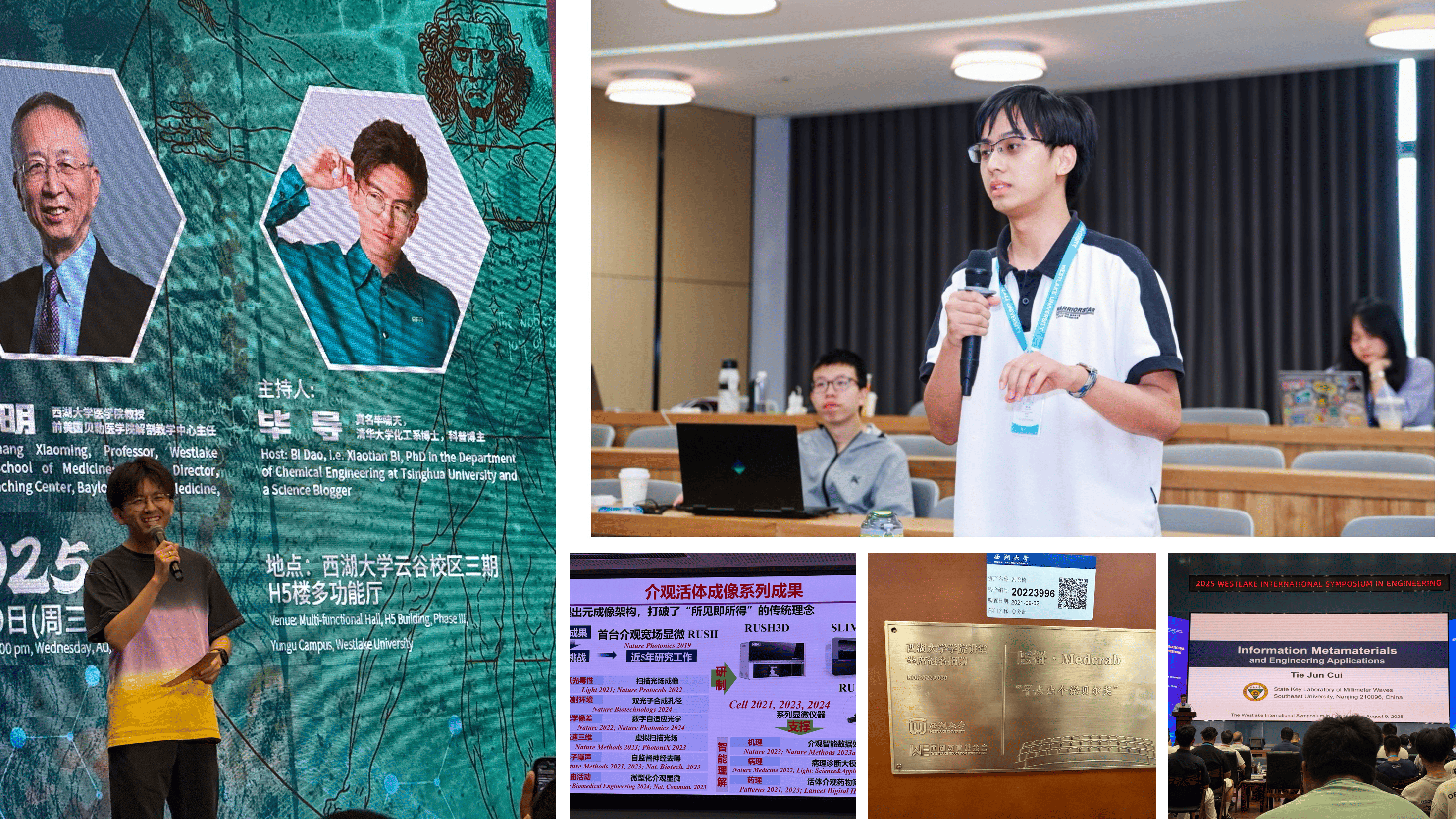
During the summer, I also attended the WISE Conference organized by the School of Engineering, where I met many distinguished scholars. Their talks helped me build a foundational understanding of advanced topics such as optical metasurfaces, micro-nano 3D printing, nano Kirigami, “truly” flexible materials, and bio-flexible electronics. In addition, there were electronic engineering summer schools, regular science lectures, and cultural performances—all reflecting Westlake’s genuine commitment to education and research.
Although Meta is undoubtedly the leader in AI glasses, I am glad to see that China still holds tremendous advantages in display technologies (e.g., Micro-LED) and supply chain strengths (e.g., batteries). Many Chinese companies are investing heavily in R&D. The synergy among third-generation wide-bandgap semiconductors, electric vehicles, and these industries is forming a new Great Wall of Chinese high-end manufacturing.
These six weeks at Westlake showed me not only cutting-edge micro-nano fabrication technologies but also a vibrant ecosystem of innovation, a group of grounded and visionary people, and a glimpse into a future shaped by light and intelligent technologies.