The National Undergraduate Innovation and Entrepreneurship Training Program is a research training project established by the Chinese Ministry of Education for undergraduates. It aims to cultivate students’ research skills and innovative thinking through faculty guidance and team collaboration. I was honored to participate in this program and worked with four other excellent team members to complete a research project that lasted nearly two years. Eventually, our project won the program’s highest honor— National Excellent Conclusion, thanks in no small part to the guidance of our mentor and the help from senior students in our lab.
This project started in the first semester of my sophomore year and took nearly two years to complete. The goal of our research was to develop an ultrasonic vibration-assisted device for scratch testing, with the core component being a vibration generator operating at ultrasonic frequencies. My role in the project was to design the structure of the device, perform initial testing, and validate its functionality.
As shown in Figure 1, the vibration source of the device was a commercially available ultrasonic transducer, which generates mechanical vibrations when voltage is applied to its electrodes. Our task was to design a mechanism to securely fix this cylindrical transducer and effectively transmit the vibrations to the sample while ensuring compatibility with the scratch testing instrument. For the clamping mechanism, I consulted my engineering drawing instructor (with whom I maintained a good relationship after participating in a engineering drawing competition) and adopted a V-groove and threaded tightening solution. To ensure leveling of the sample, we designed an annular groove for fine adjustments at the zero amplitude plane of the transducer. Additionally, I used a double-headed stud to connect the transducer and the sample stage to achieve structural stability and optimal functionality. After manufacturing the device, we conducted basic amplitude tests and applied for a utility model patent. Although the academic requirements for utility model patents are relatively low, this experience marked the starting point of my academic writing.
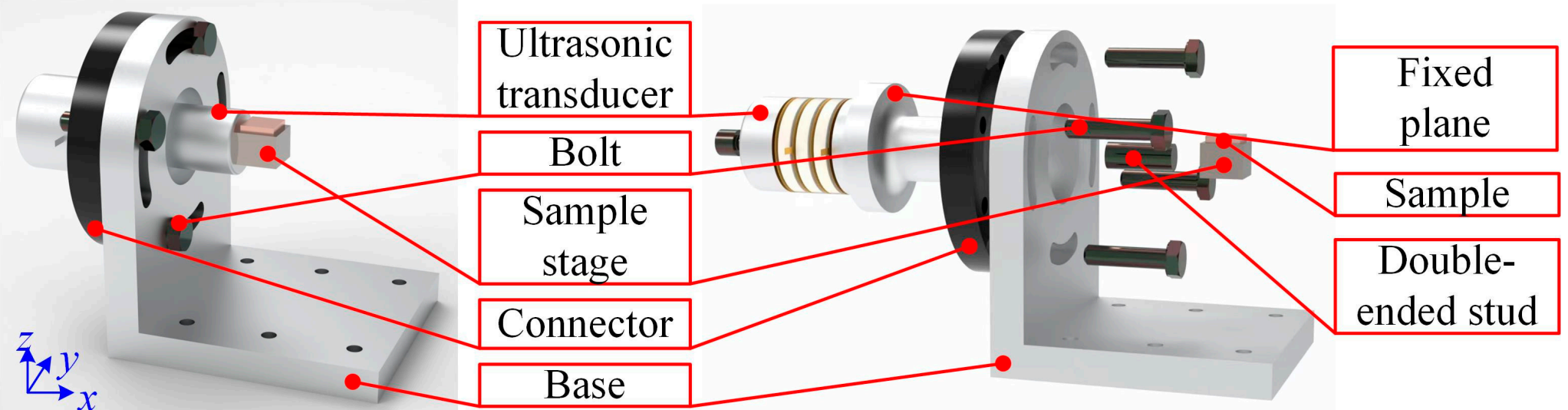
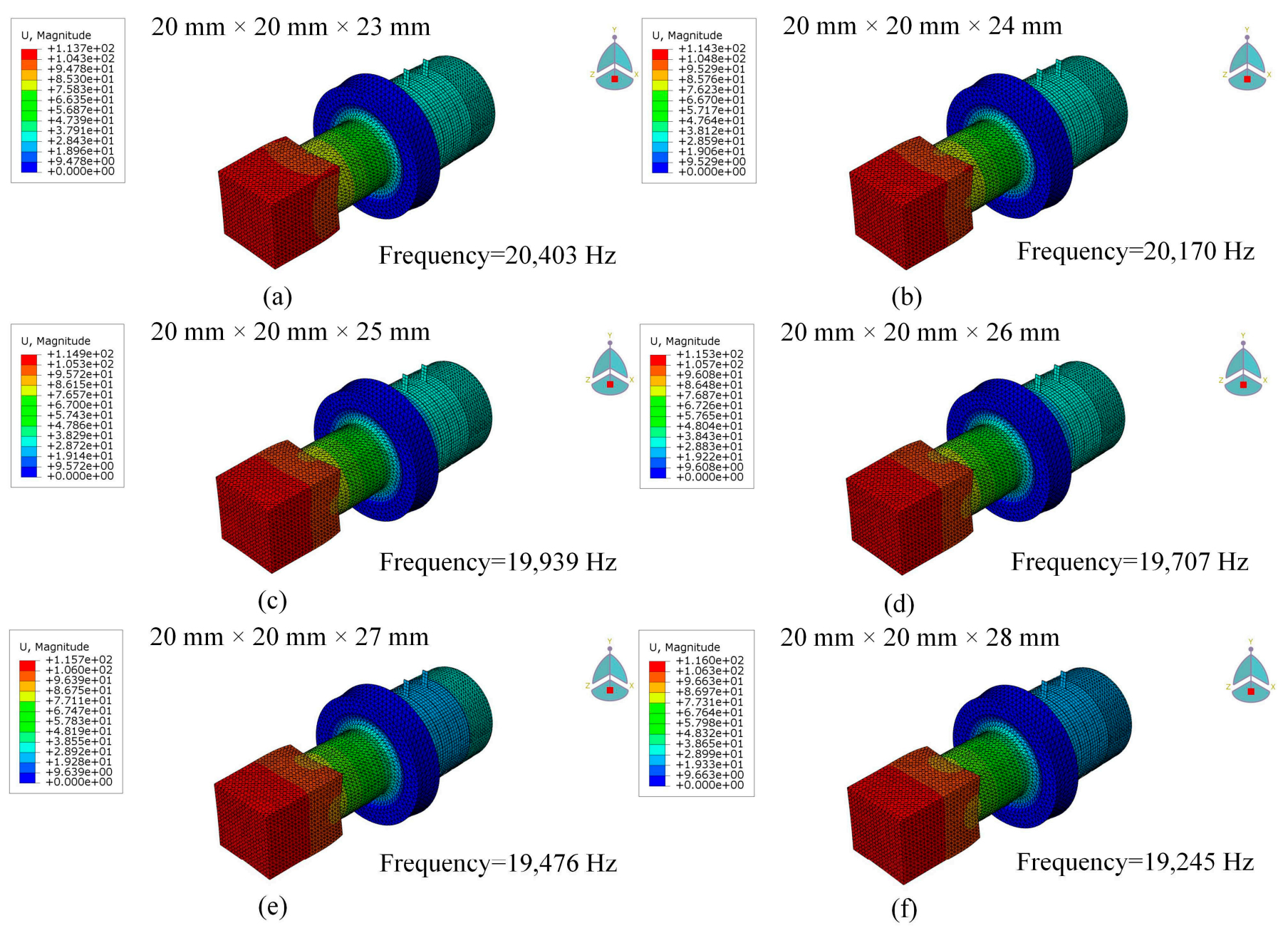
After successfully passing the project proposal defense, we were awarded national-level funding with a research budget of 10,000CNY. At this point, I had already been accepted into an exchange program at Tohoku University in Japan and was waiting for my visa. However, the project encountered a bottleneck during the finite element simulation phase. My teammates spent two weeks attempting to solve the issue without success, and the senior graduate students in our lab also lacked experience with similar simulations. In this situation, I stepped in to take over this part of the project and began learning the finite element simulation software Abaqus. After a little more than a week of learning and practice, I successfully adjusted the length parameters of the sample stage and optimized the module’s resonance frequency to match the operating frequency of the transducer at 20kHz. The subsequent experimental results closely matched my simulation analysis, providing validation for the feasibility of our design.

After I left for Japan for the exchange program, the project was primarily led by my teammate Huang. The final experimental results demonstrated that our design indeed provided significant assistance in scratch testing. At the conclusion of the project, Huang wrote a journal paper based on our work, which was published in Actuators. Ultimately, our project was awarded the National Excellent Conclusion, an honor that marked a successful conclusion to our two years of effort and gave me a preliminary understanding of the challenges and rewards of research work.