The Chinese College Students Engineering Practice and Innovation Ability Competition is classified as an “A-level competition” in our university’s competition catalog. This competition is guided by the instructors of the “Engineering Training A” course. The so-called engineering training refers to the opportunity for students to actually machine and process some parts. Unlike many other universities that set the final project as small hammers, the final project for this course at our school is open-ended machining, and we are encouraged to combine the project with the competition.
For the competition, the requirement was to design a small vehicle with an automatic steering mechanism capable of traveling along a specific route.
We referred to some resources online and designed a three-stage reduction system with a cam mechanism for steering. Since I had prior experience from the drawing competition, I was mainly responsible for the design and drafting work. People often say that working on non-standard designs is a great way to develop skills, and I didn’t realize how challenging it would be. Just selecting the standard components alone was a daunting task, as there were over a hundred of them. At that time, we hadn’t yet studied Mechanical design and Mechanical precision design, and the things we built were more similar to toys under tight size constraints. Moreover, many of the materials we used were acrylic sheets, which were quite different from the metals we were taught with.
For instance, in our design, we used a 10mm smooth shaft. At this size, it was impossible to connect the gears to the shaft using a traditional key connection because the national standards didn’t provide keys and keyways for that size. We also couldn’t use a stepped shaft for positioning since the change in diameter would cause stress concentration, further reducing the already limited strength and rigidity of the slender shaft. Eventually, after consulting related references, we found the SHF series fasteners and achieved the gear-to-shaft connection by creating holes in the gears.
Machining and assembling the small vehicle turned out to be another headache. Although standard components were numerous and diverse, they were at least purchasable. Non-standard parts, however, had to be machined by the workshop technicians at the university. If there was any flaw in the design, we would often be scolded by the technicians. I still remember the front fork I designed, which combined an irregular square plate with a cylindrical shaft. I initially thought it could be directly milled and turned in one go using a CNC machine. However, without informing us, the technician processed the square plate and the cylindrical shaft separately and then used interference fitting to force them together. While this approach simplified machining, it resulted in poor alignment of the holes on the cylinder. As a result, the small vehicle couldn’t follow the planned route properly. Later, we had to disassemble and reassemble the interference fit several times before we saw some improvement.
Apart from this, we also had to learn how to drill holes with a power drill, weld circuits, and perform other tasks ourselves. After all, it wouldn’t make sense to constantly bother the technicians for every small task.
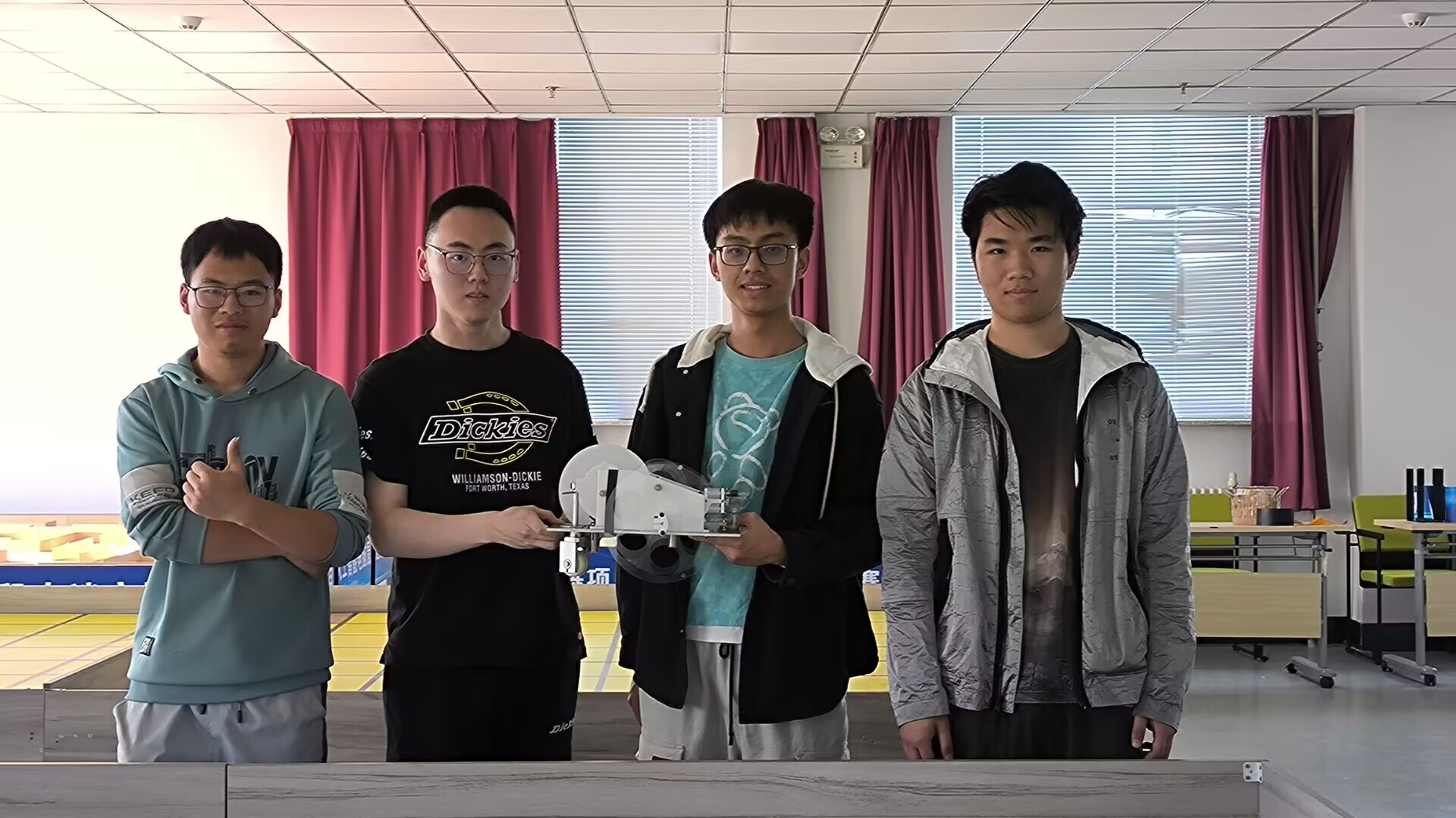
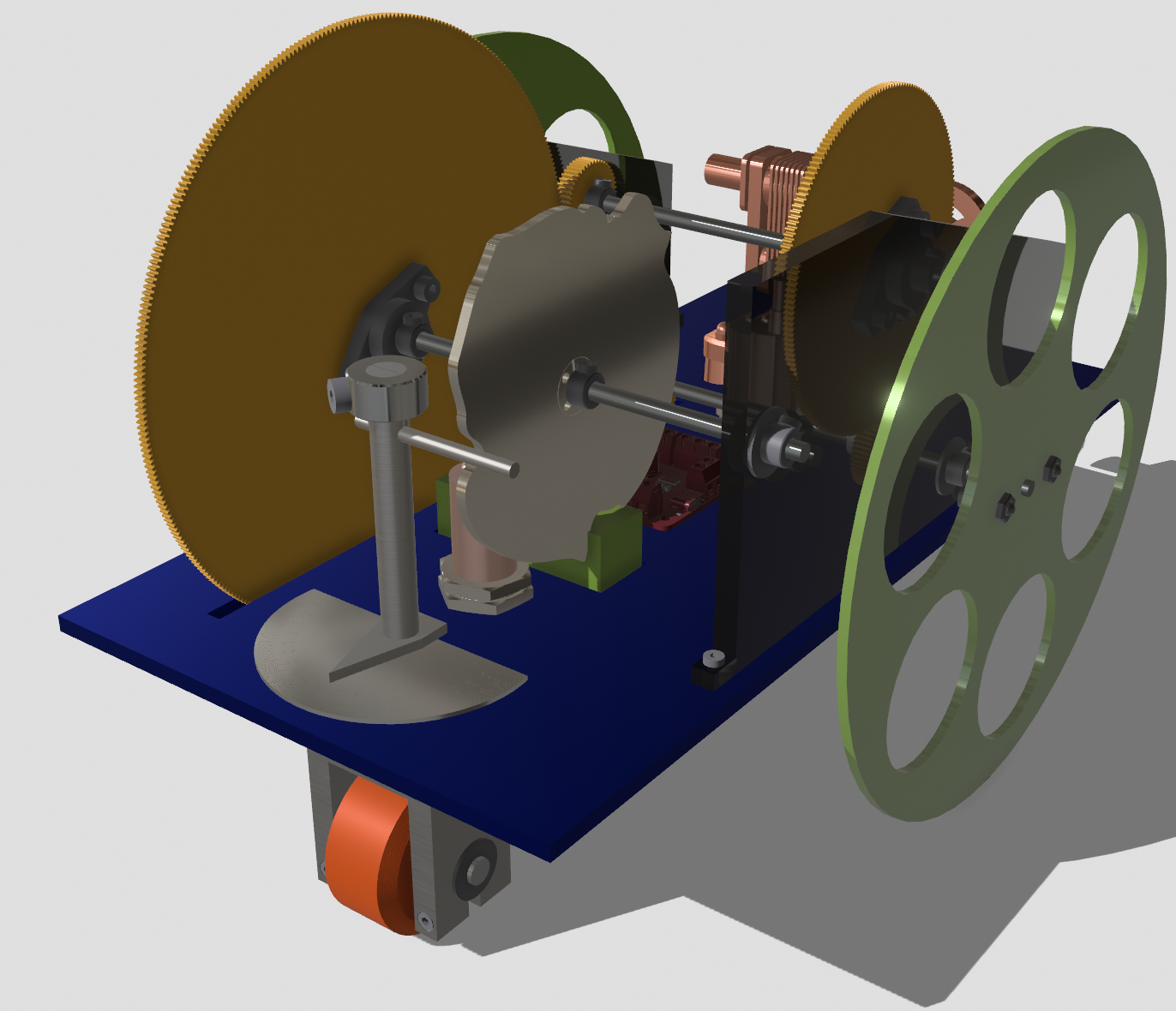
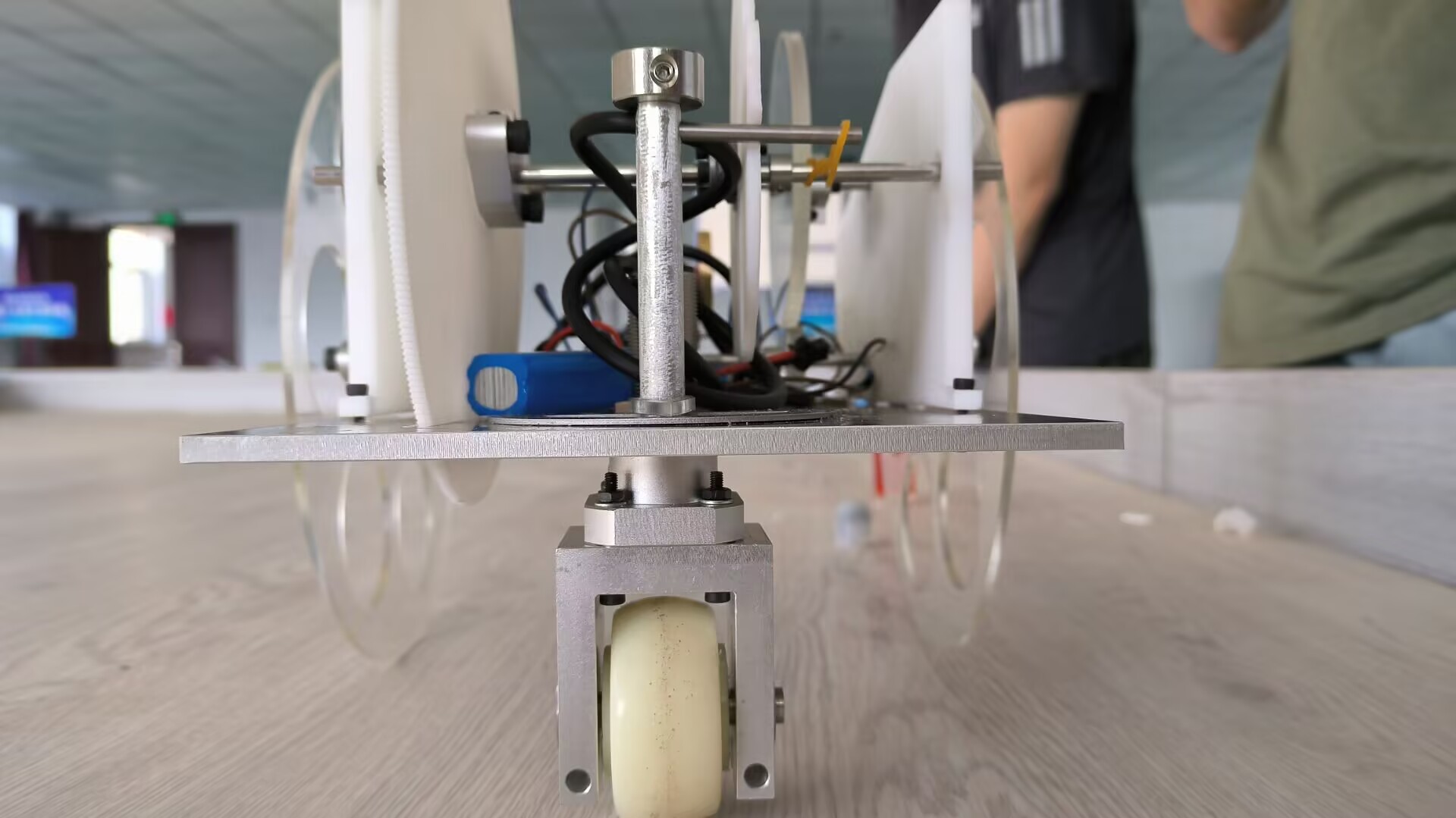
The small vehicle was finally operational, but another challenge soon arose. Due to the COVID-19, the competition was postponed to the second semester. By that time, I had already departed for Japan as an exchange student, so we had to temporarily appoint a new team leader. I only heard what happened afterward from the others.
After successfully passing the campus-level competition, our team faced new challenges in the provincial competition. The requirements for the provincial competition were different, so the team had to redesign the vehicle from scratch. The new vehicle performed quite well during the test runs, but on the day of the provincial competition, it started smoking midway through the run and failed to complete the race. Unfortunately, the team had to stop there, but we still managed to earn the provincial first prize.
What surprised me most was that, despite my absence during the second phase, they still listed my name as the second team member instead of putting me at the bottom as previously discussed. For that, I am sincerely grateful to the three other team members who continued to work hard and made this achievement possible.